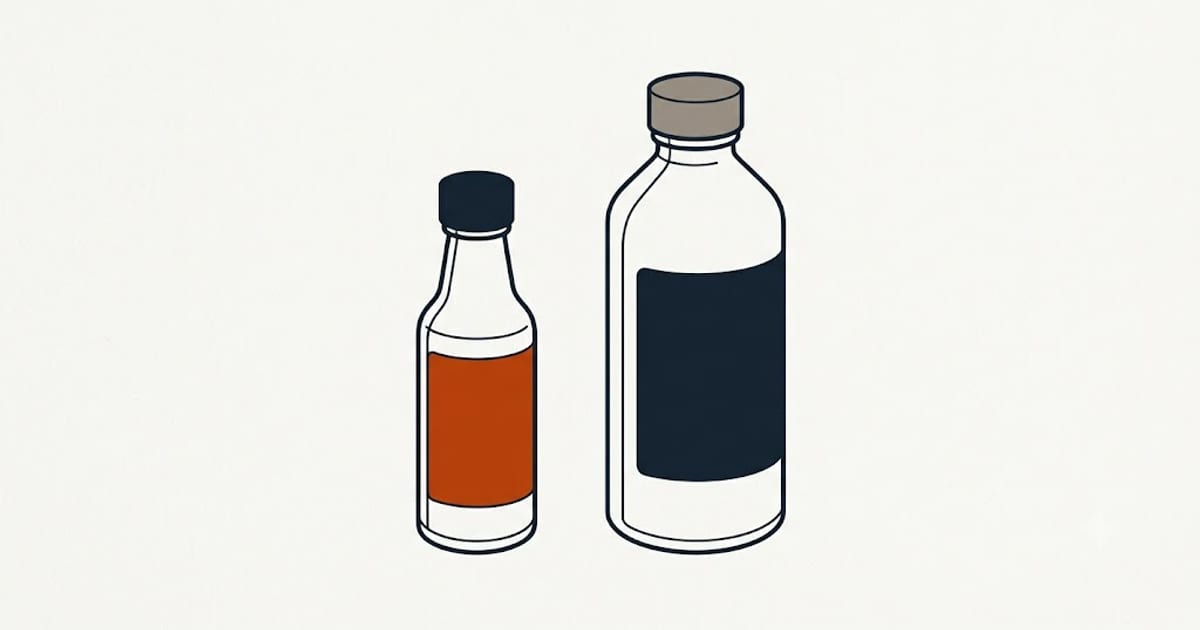
10 to 15 mg per kilogram, every 4 to 6 hours. Maximum 5 doses in 24 hours.
For the common children's suspension at 160 mg / 5 mL:
| Weight | Dose | Suspension (160 mg/5 mL) |
|---|---|---|
| 6–11 lb (2.7–5 kg) | 40 mg | 1.25 mL |
| 12–17 lb (5.5–7.7 kg) | 80 mg | 2.5 mL |
| 18–23 lb (8–10.5 kg) | 120 mg | 3.75 mL |
| 24–35 lb (11–16 kg) | 160 mg | 5 mL |
| 36–47 lb (16–21 kg) | 240 mg | 7.5 mL |
| 48–59 lb (22–27 kg) | 320 mg | 10 mL |
| 60–71 lb (27–32 kg) | 400 mg | 12.5 mL |
| 72–95 lb (33–43 kg) | 480 mg | 15 mL |
Under 3 months, or under 12 lb: ask a clinician first, and any infant under 3 months with a fever needs assessment rather than a dose.
The concentration error
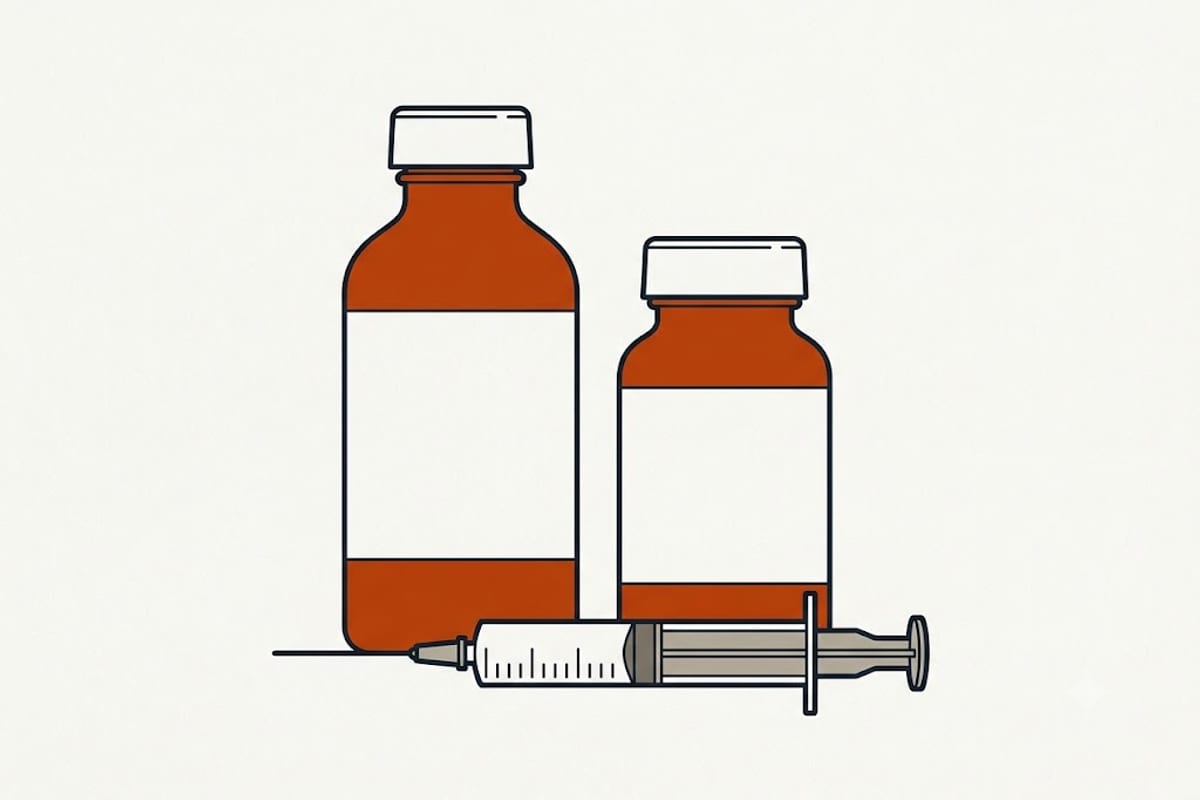
This is the single most important thing on the page.
| Product | Concentration |
|---|---|
| Children's suspension | 160 mg / 5 mL |
| Older infant drops (largely withdrawn in the US) | 80 mg / 0.8 mL |
| Some international infant formulations | 100 mg / mL |
The table above assumes 160 mg / 5 mL. Read the concentration on the bottle in front of you, every time you buy a new one, and never carry a millilitre figure across from a different product.
US manufacturers standardised infant and children's paracetamol to a single concentration some years ago precisely because this confusion was causing overdoses — but older stock, imported products and other countries' formulations still differ.
Weight beats age on the label
Package labels give age brackets because a shop cannot weigh a child. They are a proxy, and a loose one: two five-year-olds can differ by 15 lb, which is a 50% difference in the correct dose.
Where the label's age bracket and the child's actual weight disagree, use the weight.
Measuring and spacing
Use the syringe or cup supplied, or a pharmacy oral syringe. A kitchen teaspoon holds anywhere from 3 to 7 mL, and household-spoon errors are a documented category rather than a theoretical risk.
Shake the bottle — suspensions settle, and an unshaken bottle gives a weak dose from the top and a strong one from the bottom.
Write down the time of each dose. With two adults caring for an unwell child, double dosing happens through good intentions. The 5-dose daily ceiling matters as much as the single dose.
Against ibuprofen
| Acetaminophen | Ibuprofen | |
|---|---|---|
| Dose | 10–15 mg/kg | 10 mg/kg |
| Interval | 4–6 h | 6–8 h |
| Daily max | 5 doses | 40 mg/kg |
| From | 2 months (per label) | 6 months |
| With food | Not required | Yes, or with milk |
Different drugs with different ceilings, so they can be alternated on a clinician's advice — which also doubles the opportunity to lose track. If you alternate, write both down.
Weight-based ibuprofen dosing is here, and the adult daily ceiling has its own page.
When to stop and ring someone
Any child under 3 months with a fever. Signs of dehydration or refusal to drink. Repeated vomiting of the dose. Existing liver disease. Fever beyond 3 days or pain beyond 5.
Sources: Manufacturer package labelling; American Academy of Pediatrics guidance on fever and antipyretic use; NHS Paracetamol for children.
General reference reproducing published label dosing. Not medical advice. Your pharmacist and your child's doctor know the product in your cupboard and your child's history.