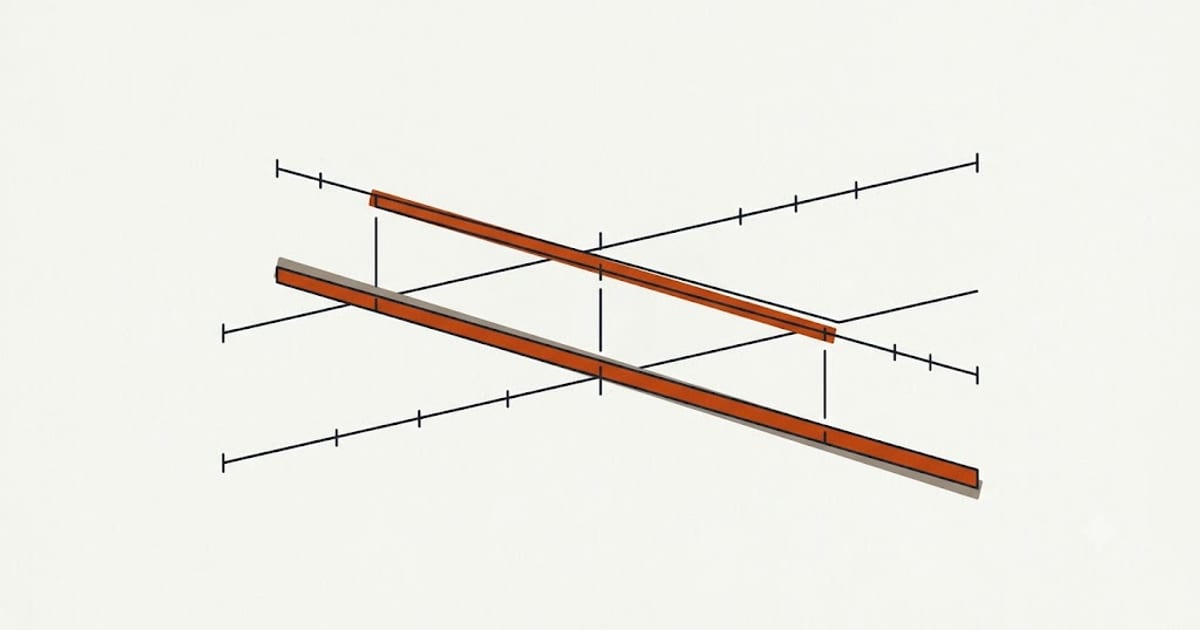
kg = lb ÷ 2.2046
lb = kg × 2.2046
| lb | kg | lb | kg | |
|---|---|---|---|---|
| 10 | 4.5 | 60 | 27.2 | |
| 15 | 6.8 | 70 | 31.8 | |
| 20 | 9.1 | 80 | 36.3 | |
| 25 | 11.3 | 90 | 40.8 | |
| 30 | 13.6 | 100 | 45.4 | |
| 35 | 15.9 | 120 | 54.4 | |
| 40 | 18.1 | 150 | 68.0 | |
| 50 | 22.7 | 180 | 81.6 |
The mental version, and its error
Halve the pounds, then subtract 10%. 40 lb → 20 → 18. The true figure is 18.1.
It runs about 0.2% low across the range, which is smaller than the difference between a child in clothes and out of them. For dosing arithmetic done in your head it is accurate enough; for anything written down, use the divisor.
The reverse shortcut — double the kilograms and add 10% — has the same accuracy. 18 kg → 36 → 39.6, against a true 39.7.
Why this conversion in particular
Almost all medication dosing is calculated per kilogram, because that is how the pharmacology was studied and published. Almost all weight in the United States is recorded in pounds.
Every paediatric dose therefore passes through this conversion, and it is a step at which errors enter — either by using the wrong factor or by converting a weight that was itself an estimate.
Weigh the child rather than estimating. "About 50 pounds" on a child who is 68 is a 36% underdose, and in the other direction on a small child it is worse.
Rounding direction
Weight-based charts print bands, and a converted weight frequently lands between two of them.
Round to the lower band. A dose calculated for a heavier child given to a lighter one is an overdose; the reverse is a slightly weaker dose that can be repeated on schedule.
That asymmetry is the whole rule. Under-dosing is a treatable disappointment; over-dosing is a different category of problem, particularly with acetaminophen, where the margin between therapeutic and harmful is narrower than for most over-the-counter drugs.
Where a weight sits exactly on a boundary, the lower band is again the safer reading unless a clinician has said otherwise.
Ounces matter in infants
For babies, weight is often recorded in pounds and ounces, and the ounces are not decimal.
16 ounces = 1 pound. So 12 lb 8 oz is 12.5 lb, not 12.8. Treating the ounces as a decimal fraction is a small error at 8 oz and a meaningful one at 12 oz — and in a 12 lb baby, meaningful.
Convert to decimal pounds first, then to kilograms: 12 lb 8 oz → 12.5 lb → 5.7 kg.
Weighing the child properly
The conversion is only as good as the weight going into it, and a weight taken casually is the larger source of error in practice.
Undressed or in light clothing, on the same scale each time, and recorded rather than remembered. A nappy alone adds a meaningful fraction of an infant's weight once wet. Shoes and a winter coat on an older child add a pound or more, which is enough to cross a dosing band.
Bathroom scales designed for adults are poor at low weights — many have a minimum threshold below which they will not register, and their resolution at 20 lb is coarse. For infants the usual approach is to weigh an adult alone, then the adult holding the baby, and subtract; that inherits the scale's error twice but is better than a reading the scale cannot take.
Where the dose matters and the weight is uncertain, a pharmacy will weigh a child on a calibrated scale.
Stones, for UK-facing charts
1 stone = 14 lb = 6.35 kg. Adult weight in the UK is still commonly given in stones and pounds, and a chart written for one system is easy to misread in the other.
Weight-based dose tables in both systems are on the dosing pages: ibuprofen and acetaminophen.
Sources: NIST unit definitions; manufacturer package labelling for weight-based paediatric dosing.
Reference tables for general information, not medical advice. Any dose belongs with your pharmacist or clinician.