| Age | Resting heart rate |
|---|---|
| Newborn (0–1 mo) | 100–160 |
| Infant (1–12 mo) | 90–150 |
| Toddler (1–3 yr) | 80–140 |
| Preschool (3–5 yr) | 75–120 |
| School age (6–12 yr) | 70–110 |
| Teen (13–18 yr) | 60–100 |
| Adult | 60–100 |
| Well-trained athlete | 40–60 |
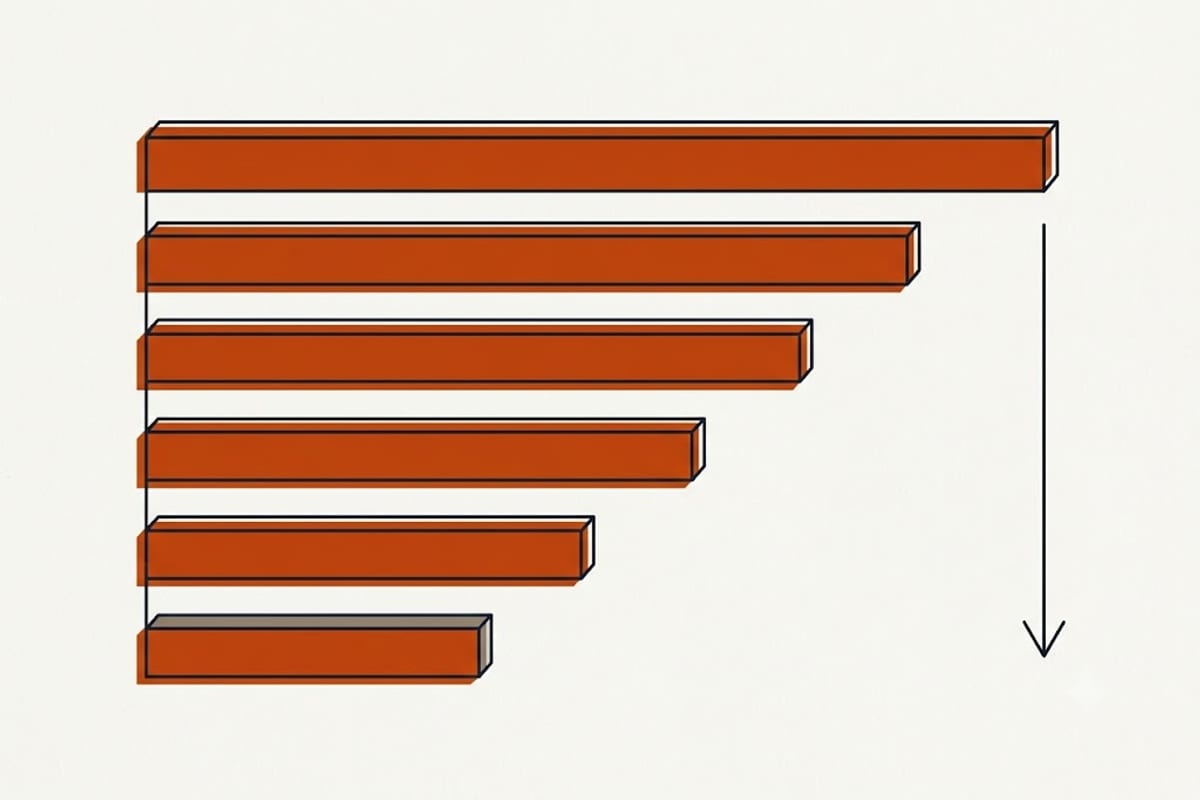
This one really does vary with age
Blood pressure categories are the same for every adult. Heart rate is not — and the variation across childhood is large enough that a rate entirely normal for a newborn would be a concern in an adult.
The reason is size. A smaller heart moves less blood per beat, so it beats more often to deliver the same volume per minute. The range narrows and falls steadily until the late teens, then holds.
Among adults it does not drift meaningfully with age. A healthy 70-year-old and a healthy 30-year-old share the same 60 to 100 range.
Below 60 is often fitness, not a problem
Endurance training increases stroke volume — more blood per beat — so fewer beats are needed. Trained cyclists and runners commonly rest in the 40s, and some elite athletes lower.
That is bradycardia by the numbers and conditioning in practice. The distinction is symptoms: a low rate with no dizziness, breathlessness or fatigue in someone who trains is expected. The same rate in someone sedentary, or with those symptoms, is worth a conversation.
Some medications — beta blockers in particular — lower resting rate by design.
Taking a pulse so the number means something
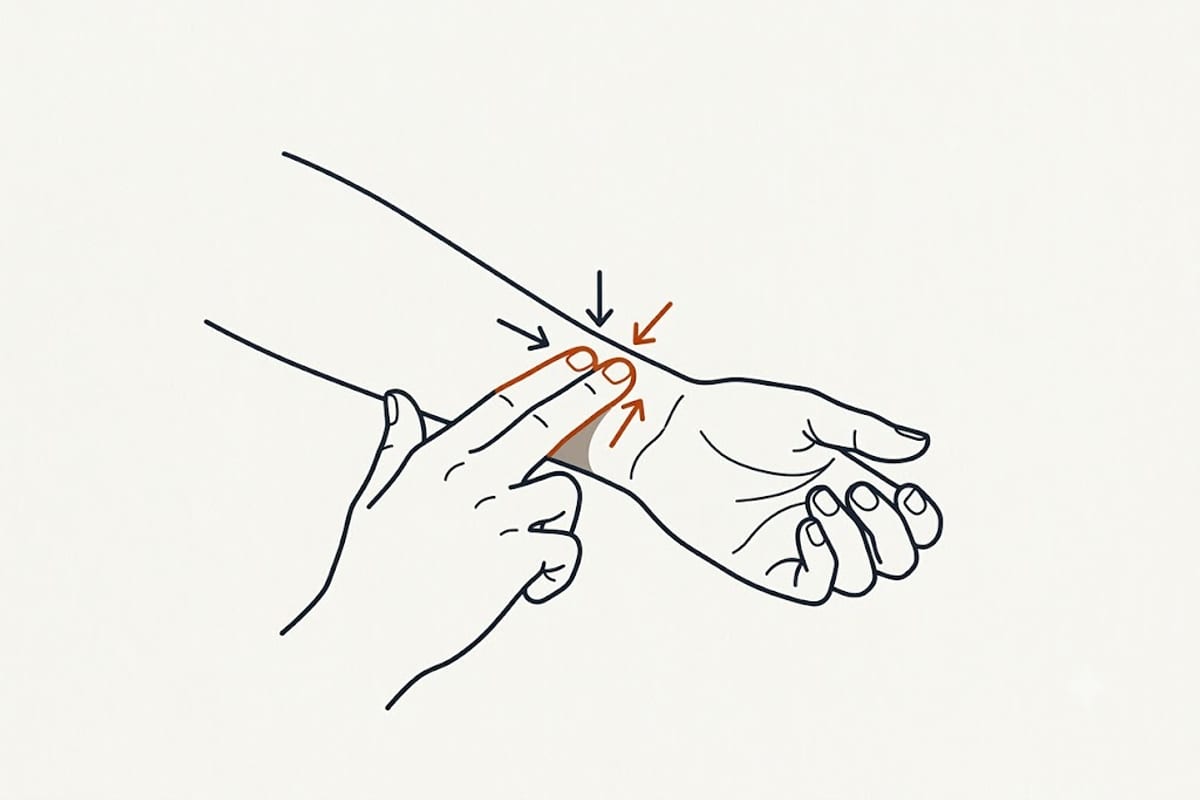
Radial pulse: two fingers on the thumb side of the inner wrist. Not the thumb, which has its own pulse.
Count for 30 seconds and double it, or a full 60 seconds if the rhythm feels irregular. A 15-second count multiplied by four magnifies any error fourfold.
Rest first. Resting heart rate means resting: sitting quietly for at least five minutes, not immediately after standing, climbing stairs, or a conversation.
Same time of day. Rate is lowest in the early morning before rising and drifts up through the day.
What moves the number
Caffeine, nicotine, alcohol — up, for hours. Fever — roughly 10 beats per minute for each degree Celsius. Dehydration — up. Anxiety and pain — up, sometimes considerably. Sleep — down, often into the 40s or 50s in healthy adults, which is normal.
Pregnancy raises resting rate by 10 to 20 beats per minute across the second and third trimesters.
None of that makes a single reading meaningless; it makes the conditions of the reading part of the reading.
Maximum heart rate is a different number entirely
The 60-to-100 range describes rest. Maximum heart rate — the ceiling during hard exertion — is estimated as roughly 220 minus age, which puts a 40-year-old near 180.
That formula is a population average with a standard deviation of about 10 to 12 beats, so an individual can sit well either side of it without anything being wrong. It is useful for setting training zones and useless as a personal limit.
Target zones for exercise are usually quoted as 50 to 70% of maximum for moderate activity and 70 to 85% for vigorous. Those percentages inherit the formula's imprecision, which is why perceived exertion — whether you can hold a conversation — is often the more practical guide.
When a number needs a clinician rather than a chart
A resting rate persistently above 100 or below 60 without a training explanation, an irregular rhythm, or any rate accompanied by chest pain, breathlessness, fainting, or light-headedness.
A single reading outside the range in an otherwise well person is common. A pattern across several days, taken properly, is what carries information — the same principle as blood pressure, where one reading is not a diagnosis.
Sources: American Heart Association Target Heart Rates; National Institutes of Health vital signs reference; NHS Pulse rate.
Reference ranges reproduced for general information. Not medical advice, and no substitute for a clinician who knows your history and medication.