Under 120/80 mmHg. That is the normal range for a 60-year-old, and it is the same figure as for a 30-year-old.
The current American Heart Association and American College of Cardiology guideline defines the categories by reading, not by age. There is no separate, more permissive normal for older adults in it.
The categories
| Category | Systolic | Diastolic | |
|---|---|---|---|
| Normal | under 120 | and | under 80 |
| Elevated | 120–129 | and | under 80 |
| Hypertension stage 1 | 130–139 | or | 80–89 |
| Hypertension stage 2 | 140 or higher | or | 90 or higher |
| Hypertensive crisis | over 180 | and/or | over 120 |
Two details in that table do real work.
"Or", not "and", from stage 1 down. A reading of 135/75 is stage 1 hypertension on the systolic number alone. The lower number being fine does not rescue it.
"Elevated" requires both. 125/85 is not elevated — it is stage 1, because the diastolic is in the 80s.
Where the age-based numbers came from
A great deal of material online still gives an age table: 120/80 at thirty, 130/85 at fifty, 140/90 at seventy.
Those numbers are descriptive averages, not targets. Blood pressure does rise with age in most populations, mainly because arteries stiffen, so the average 70-year-old does read higher than the average 30-year-old. Publishing that average as "normal for 70" turns a description of what happens into a permission slip.
The 2017 guideline moved the diagnostic threshold from 140/90 down to 130/80 for all adults specifically because the outcome data did not support treating a higher number as acceptable simply because it was common.
What one reading is worth
Very little. Blood pressure varies through the day by 10 to 20 mmHg, rises with a full bladder, a recent coffee, a conversation, and a walk from the car park.
A diagnosis rests on an average of two or more readings on two or more occasions, and home readings taken calmly are often more representative than clinic ones. White coat hypertension — higher in the clinic than at home — is common enough to be a named phenomenon, and so is its opposite.
Measuring so the number means something
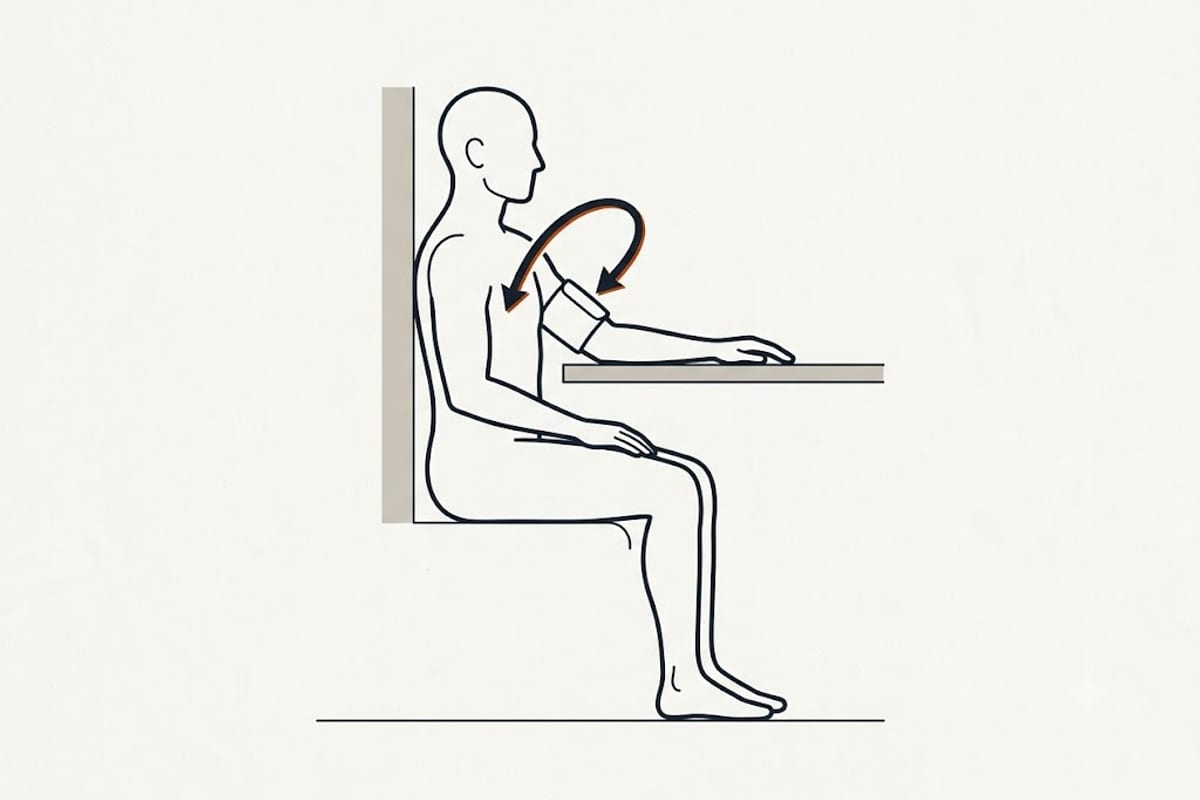
- Sit quietly for 5 minutes first. Back supported, feet flat, legs uncrossed.
- Arm resting at heart level, supported. An unsupported arm reads several mmHg high.
- Cuff on bare skin, correct size. A cuff too small is the single most common cause of a falsely high reading.
- No talking during the measurement.
- No caffeine, exercise or smoking in the preceding 30 minutes.
- Take two readings a minute apart and record both.
An adult cuff on a large arm can read 10 to 40 mmHg high. If your upper arm circumference is over about 13 inches, the standard cuff that came with the monitor is probably the wrong one.
When a reading needs action rather than a note
Over 180 systolic or over 120 diastolic: wait five minutes and repeat. If it stays there, contact a doctor the same day. With chest pain, breathlessness, weakness, difficulty speaking, or visual change alongside it, treat it as an emergency.
Consistently 130/80 or above across several days of home readings is worth a scheduled appointment, not an urgent one.
Resting heart rate is measured in the same sitting and follows a different rule entirely — it genuinely does vary with age, unlike blood pressure, and a resting rate of 60 to 100 covers healthy adults of any age. Lab values follow their own reference ranges rather than fixed categories: see A1C and average glucose, the unit conversions between mg/dL and mmol/L, and weight-based dosing, which is the one place on this site where the arithmetic matters more than the reference range.
Sources: 2017 ACC/AHA Guideline for the Prevention, Detection, Evaluation, and Management of High Blood Pressure in Adults; American Heart Association, Understanding Blood Pressure Readings.
This page reproduces published clinical reference ranges for general information. It is not medical advice, it cannot account for your history or medication, and it does not replace a clinician.