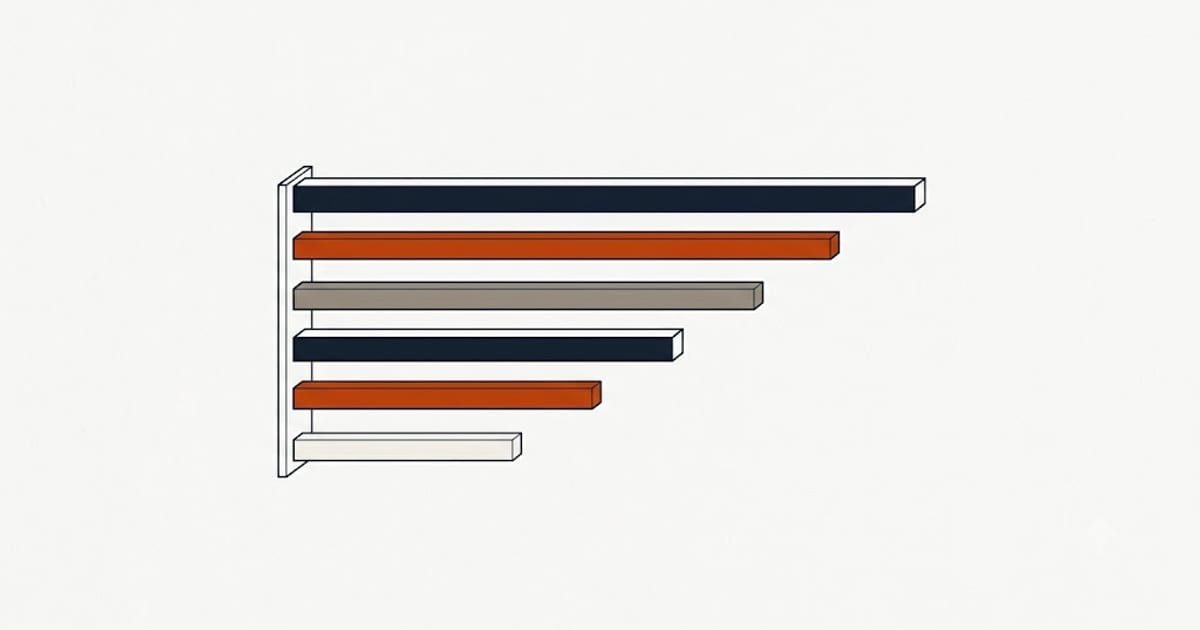
| Age | Breaths per minute |
|---|---|
| Newborn (0–1 mo) | 30–60 |
| Infant (1–12 mo) | 25–50 |
| Toddler (1–3 yr) | 20–35 |
| Preschool (3–5 yr) | 20–30 |
| School age (6–12 yr) | 18–25 |
| Teen (13–18 yr) | 12–20 |
| Adult | 12–20 |
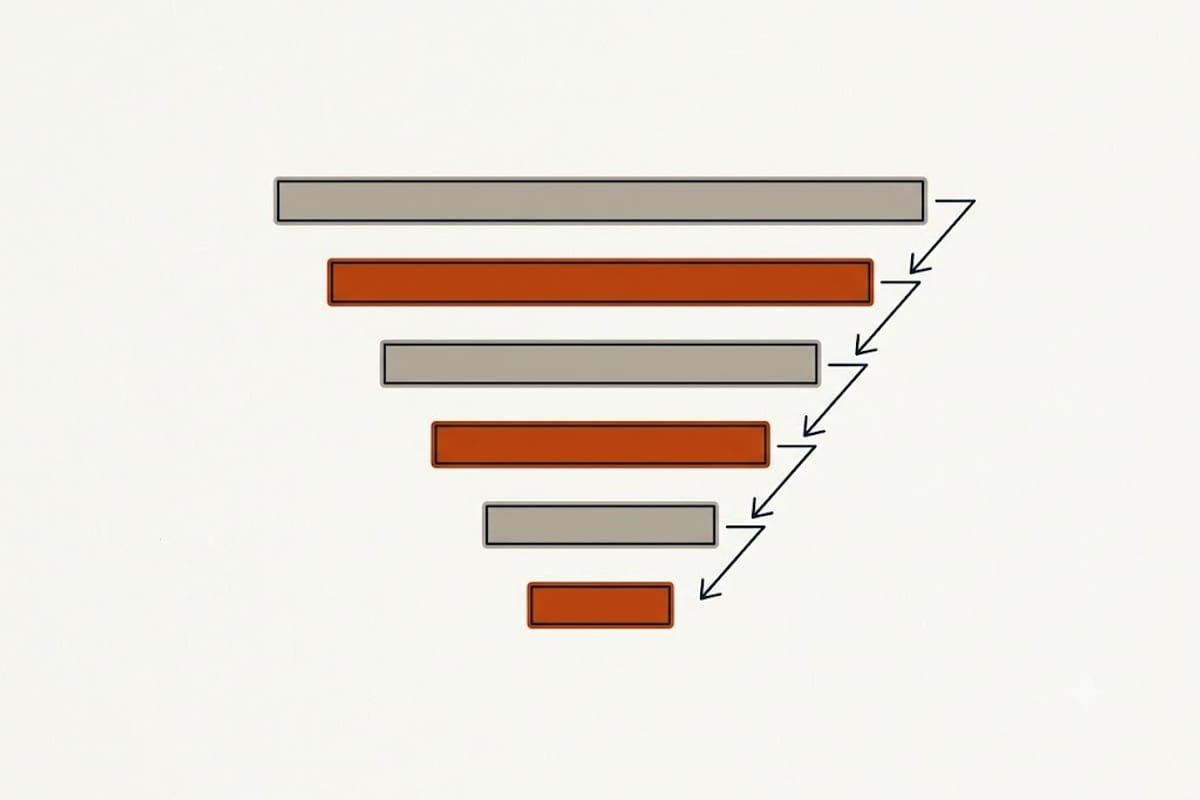
A newborn breathes up to five times as fast as an adult, for the same reason a newborn's heart beats faster: smaller lungs move less air per breath, so more breaths are needed for the same volume per minute.
The most informative vital sign, and the least often taken
Respiratory rate changes earlier than heart rate or blood pressure in most acute deterioration. Several early-warning scoring systems weight it heavily for that reason.
It is also the one most frequently estimated rather than counted, or recorded as "16" out of habit. A rate that is actually counted carries information; one that is guessed carries none.
Counting it without changing it
Breathing is partly voluntary, so anyone who knows you are counting will breathe differently. This is unique among vital signs and it is the reason for the standard trick:
Count while appearing to take the pulse. Keep two fingers on the wrist, watch the chest or shoulder rise, and count for a full 30 seconds — doubling — or 60 seconds if the pattern is irregular.
In babies, watch the abdomen rather than the chest, since infants breathe mainly with the diaphragm. Count when settled, not immediately after crying or feeding.
Newborns normally show periodic breathing — short pauses of a few seconds followed by faster breaths — and that irregularity is expected rather than concerning, provided the pauses are brief and the colour is normal.
Work of breathing matters more than the count
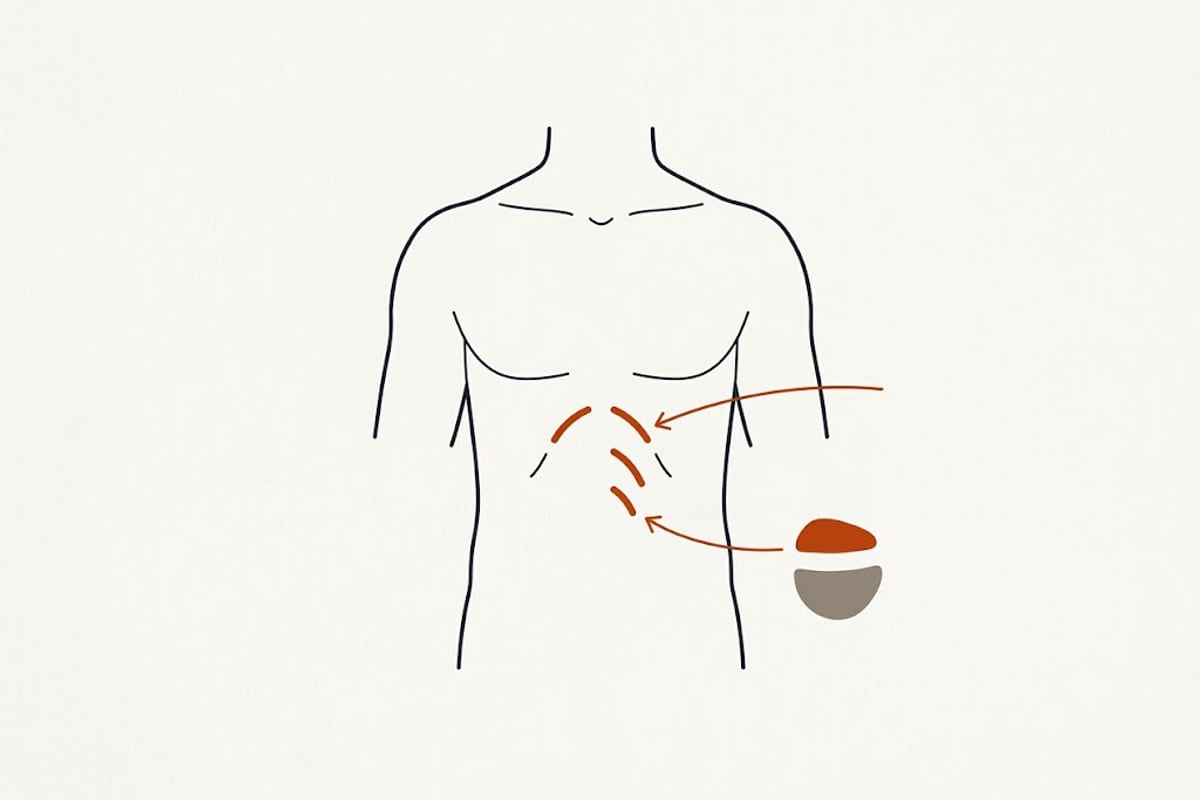
A number in range with visible effort is a worse picture than a slightly raised number with easy breathing. The signs to look for, particularly in children:
Retractions — skin drawing in between or under the ribs, or at the base of the neck, on each breath. Nasal flaring. Grunting at the end of each breath in infants. Head bobbing. Using shoulder and neck muscles to breathe. Unable to speak a full sentence, or in a baby, unable to feed.
Any of those needs assessment regardless of the count.
What raises the rate without illness
Fever raises it, roughly in step with heart rate. Pain, anxiety, exertion and altitude raise it. Pregnancy raises it modestly.
Sleep lowers it, and in adults a rate in the low teens during sleep is ordinary.
Pattern, not just rate
Two breathing patterns are worth recognising because they mean something specific and neither shows up in a count.
Deep, sighing, laboured breathing at a normal or slightly raised rate — Kussmaul breathing — is the body blowing off acid, and in someone unwell with diabetes it is a red flag for diabetic ketoacidosis.
Cycles of gradually deepening then shallowing breaths separated by pauses — Cheyne-Stokes — occur in advanced heart failure and in some neurological conditions, and also at altitude in healthy people during sleep.
Neither is something to diagnose from a page. They are here because someone counting a rate may see them and would otherwise record a number that misses the whole finding.
When the number itself is urgent
Adults: below 8 or above 25 breaths per minute at rest.
Children: consistently above the range for age at rest, or any pause in breathing lasting more than about 20 seconds in an infant.
Any age: blue lips or fingertips, difficulty speaking, confusion, or breathing that is becoming slower and shallower in someone who was previously working hard — the last of which can indicate exhaustion rather than improvement and is an emergency.
Oxygen saturation is read alongside it and measures something different: an oximeter does not measure work of breathing, and someone maintaining 94% by breathing hard is not in the same situation as someone at 94% breathing comfortably.
Sources: NIH and CDC vital signs reference material; American Heart Association paediatric assessment guidance; NHS breathing rate reference.
Reference ranges for general information. Not medical advice, and no substitute for clinical assessment.